The New Alphabet Song: What Changed and How to Sing It Right
The new alphabet song is everywhere, but what actually changed? Learn the updated lyrics, why 'elemenopee' is gone, and how to sing it right.
You have probably heard the buzz. Maybe your kid came home singing something different. Or you saw that TikTok with 700 million views and thought, wait, did I miss a memo? You are not alone. The new alphabet song has been popping up everywhere, and if you are feeling a little lost, that is totally fair. Let us walk through exactly what changed, why it changed, and how you can sing it right now without tripping over your tongue. It is simpler than you think, and honestly, it kind of makes sense once you hear the reason behind it.
Table of Contents
- Wait, Did They Actually Change the Alphabet Song?
- Why the Change? The "Elemenopee" Problem
- The Exact New Lyrics (With Pauses)
- What Parents and Teachers Are Saying
- Common Questions About the New Alphabet Song
- How to Teach the New Alphabet Song to Your Child
- The New Alphabet Song and Special Learning Needs
- Turning a Memory Into Music: A Different Kind of Song
- The Bottom Line: What You Need to Know
Wait, Did They Actually Change the Alphabet Song?
Yes, the song changed. But take a deep breath: the alphabet itself did not change. A to Z is still A to Z. Nobody rearranged the letters or added any new ones. What shifted is how we sing those middle letters.
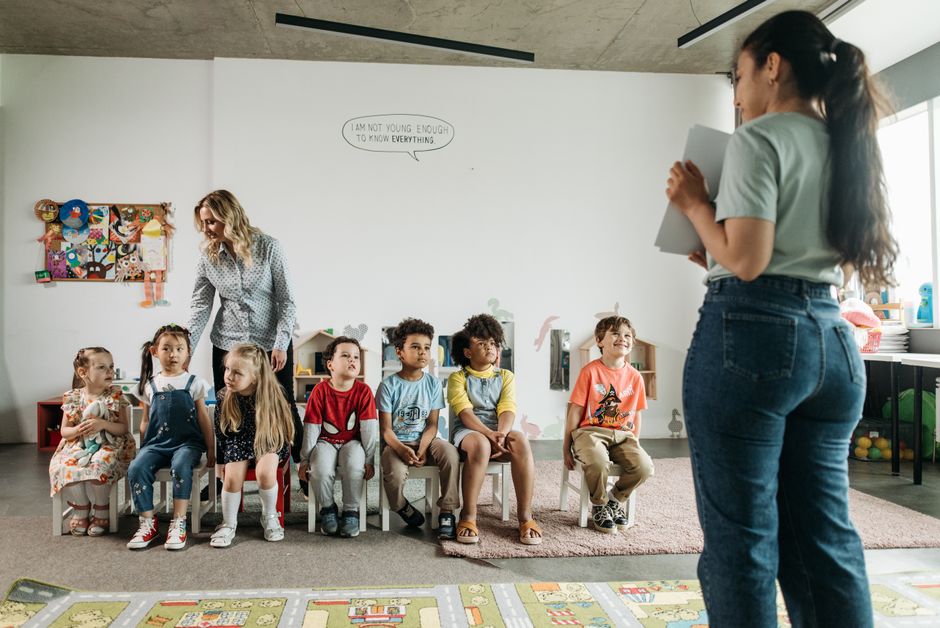
The old rapid-fire "LMNOP" that we all grew up with is now a slower, clearer "L-M-N." That is the headline. The viral version, the one you have probably heard on TikTok or seen debated on Facebook, breaks the song into deliberate pauses. It goes like this: ABCDEFG, then a pause, then HIJKLMN, another pause, OPQ, RST, UVW, and finally XYZ. Each cluster gets its own little breath.
This is not a top-down mandate from some government education board. The change is grassroots, driven by teachers and parents who noticed a problem and decided to fix it. And while it might feel brand new, the version has been circulating since at least 2019. It is exploding now on social media in 2026 because more and more preschools and kindergarten classrooms are adopting it, and parents are filming their kids singing it at home.
Why the Change? The "Elemenopee" Problem
If you ever wondered why "LMNOP" sounded like one long, confusing word, you are not imagining things. For decades, kids have heard that rapid cluster and thought "elemenopee" was a single letter. Ask a four-year-old to say the alphabet and you might hear "H, I, J, K, elemenopee, Q, R, S." It is adorable, but it is also a real learning hurdle.
Teachers noticed this confusion year after year. The old song's pacing mashed L, M, N, O, and P together so tightly that young brains could not separate them. The new version fixes that by giving L, M, and N their own distinct moment. Each letter gets pronounced clearly, with a tiny pause between them. No more "elemenopee."
This shift helps more than just the average preschooler. Children with speech delays benefit from the slower, more deliberate pronunciation. ESL learners, who already face the challenge of mapping unfamiliar sounds to letters, find the new pacing much easier to follow. The old blur was especially confusing for non-native speakers trying to connect what they heard to what they saw on the page. While no formal studies are cited yet, the educational rationale is widely accepted by early childhood educators, and anecdotally, teachers report fewer confused looks during alphabet time.
The Exact New Lyrics (With Pauses)
Here is the new version, broken into the clear segments you will hear in classrooms and viral videos:
ABCDEFG
HIJKLMN
OPQ
RST
UVW
XYZ
The biggest change is right there in the second line. "L-M-N" is now sung as three separate letters, not the old blur. The rhythm is slower overall, with intentional pauses between each group. The tune itself has not changed. It is still the same "Twinkle, Twinkle, Little Star" melody we all know. Only the pacing and pronunciation of those middle letters got a makeover.
If you want to hear it sung, you can find video demonstrations on TikTok, YouTube, and parenting sites like The Bump. Hearing it once is usually enough to get it stuck in your head.
New vs. Old: A Side-by-Side Comparison
The old version gave us "LMNOP" as one rapid cluster, almost a single syllable. The new version gives us "L-M-N" as three distinct letters. The old version had no deliberate pauses between letter groups. The new version has clear breaks after each segment, like musical punctuation. The old version often ended with "Now I know my ABCs, next time won't you sing with me." The new version keeps that same ending, but the rhythm leading up to it feels different because of those earlier pauses.
The melody is identical. Only the pacing and pronunciation of those middle letters changed. If you are a parent or teacher trying to unlearn the old way, focus on that second line. That is where the muscle memory lives.
What Parents and Teachers Are Saying
Reactions are, predictably, all over the map. Many educators and millennial and Gen Z parents love the clarity. They see their kids grasping the alphabet faster and with less confusion, and that feels like a win.
Some adults, however, feel genuinely unsettled. A viral Reddit thread captured one commenter describing themselves as "disgusted" by the change from "LMNOP" to "L-M-N." That is a strong word, but it speaks to something real. The old song is tied to childhood memories, to sitting on a parent's lap, to singing along with Sesame Street. Changing it can feel like losing a small piece of the past.
The TikTok video from @mamadontbreak has over 739 million views, which tells you just how much this topic resonates. That is not just curiosity. That is a massive cultural moment. The change even crossed into mainstream news, with coverage on Fox News and USA Today. Most critics come around once they understand the educational reasoning behind the change. It is hard to argue against something that helps kids learn more effectively.
Common Questions About the New Alphabet Song
Was the alphabet song changed?
Yes. The song's rhythm and pronunciation were updated, but the alphabet order, A through Z, remains exactly the same. Nothing got rearranged.
Did the alphabet order change?
No. Only the song changed. The letters are still in the same sequence they have always been. You can put away the panic.
Is this an official change?
No single authority mandated it. There is no Department of Education decree or Common Core requirement. It is a teacher-driven, grassroots shift that went viral because it works.
Do I have to teach my kid this version?
It is not required. But many schools and preschools are adopting it because it reduces confusion. If your child's classroom uses it, consistency at home helps. If not, you can stick with the classic.
Where can I hear the new version?
Search "new alphabet song" on YouTube or TikTok. You will find countless videos of teachers, parents, and kids demonstrating the new pacing. Parenting sites like The Bump also have the full lyrics and descriptions.
How to Teach the New Alphabet Song to Your Child
If you want to try this at home, start by singing the old version together first. It is familiar and fun. Then introduce the new pauses one group at a time. Clap or tap on each letter group to reinforce the rhythm: clap on "ABCDEFG," pause, clap on "HIJKLMN," and so on. The physical motion helps lock in the new pattern.
Use visual aids. Point to each letter on an alphabet chart as you sing the new groupings. Seeing the letters while hearing the distinct sounds reinforces the connection. Practice the "L-M-N" section slowly at first. That is the trickiest adjustment for both kids and adults. Your brain wants to rush through it. Slow it down on purpose.
Make it fun. Turn it into a game where you race to see who can sing the new version without tripping up. Laugh when you mess up. Your kid will love catching you making a mistake, and that playfulness takes the pressure off.
The New Alphabet Song and Special Learning Needs
The slower pacing and clearer pronunciation offer real benefits beyond the general classroom. Children with speech delays often struggle with rapid sound sequences. The new version gives them time to process and produce each letter sound individually.
ESL learners benefit because "elemenopee" was especially confusing for non-native speakers. Hearing "L-M-N" as three separate sounds makes it easier to map those sounds to written letters. Children with dyslexia may find the new version easier to follow due to the deliberate pauses, which reduce the cognitive load of processing a fast stream of auditory information.
The change was not specifically designed for special needs, but early childhood educators report positive results across a range of learning styles. If your child has an IEP or a speech therapy plan, ask their therapist if the new version could support their goals. It might be a simple, no-cost tool to add to your routine.
Turning a Memory Into Music: A Different Kind of Song
Learning a new song, whether it is the alphabet or a personal melody, is about connection and meaning. The songs that stick with us are the ones tied to a feeling, a moment, a face. That is the whole idea behind what we do here at Memories Made Music.
You can turn any cherished photo into a full original song with real vocals, delivered in about a minute. Imagine taking a picture of your child on their first day of school, or a snapshot from your wedding, or a photo of a parent who is no longer here, and hearing it become a song. Real lyrics, real melody, built from that single image. Your first song is free with just an email, no password and no credit card needed. Whether it is for a birthday, anniversary, memorial, or just to preserve a special moment, a custom song makes the memory last in a way that a photo alone cannot. If you are looking for a truly personal gift, a song from a photo is the kind of thing that makes people cry happy tears.
The Bottom Line: What You Need to Know
The new alphabet song changes only the pacing and pronunciation of L, M, and N. The alphabet order is untouched. The change is teacher-driven, not government-mandated, and it has gone viral on TikTok and YouTube for a reason: it helps kids learn without the "elemenopee" confusion.
You can learn the new lyrics in under a minute: ABCDEFG, HIJKLMN, OPQ, RST, UVW, XYZ. That is it. Whether you love it or quietly miss the old version, the new song is here to stay in many classrooms across the US as of 2026.
And if you are looking to create a different kind of song, one that is personal and meaningful and yours alone, you know where to find us. Some songs teach us our letters. Others teach us what love feels like. Both are worth singing.
Turn your favorite photo into a song.
Make your song →About the author
Chris Taylor — Chris built Memories Made Music, the studio that turns a photo into a complete, original song. He works hands-on with the writing, recording, and mixing behind every track.